Why Does Honey Crystallise? What It Means and What to Do About It
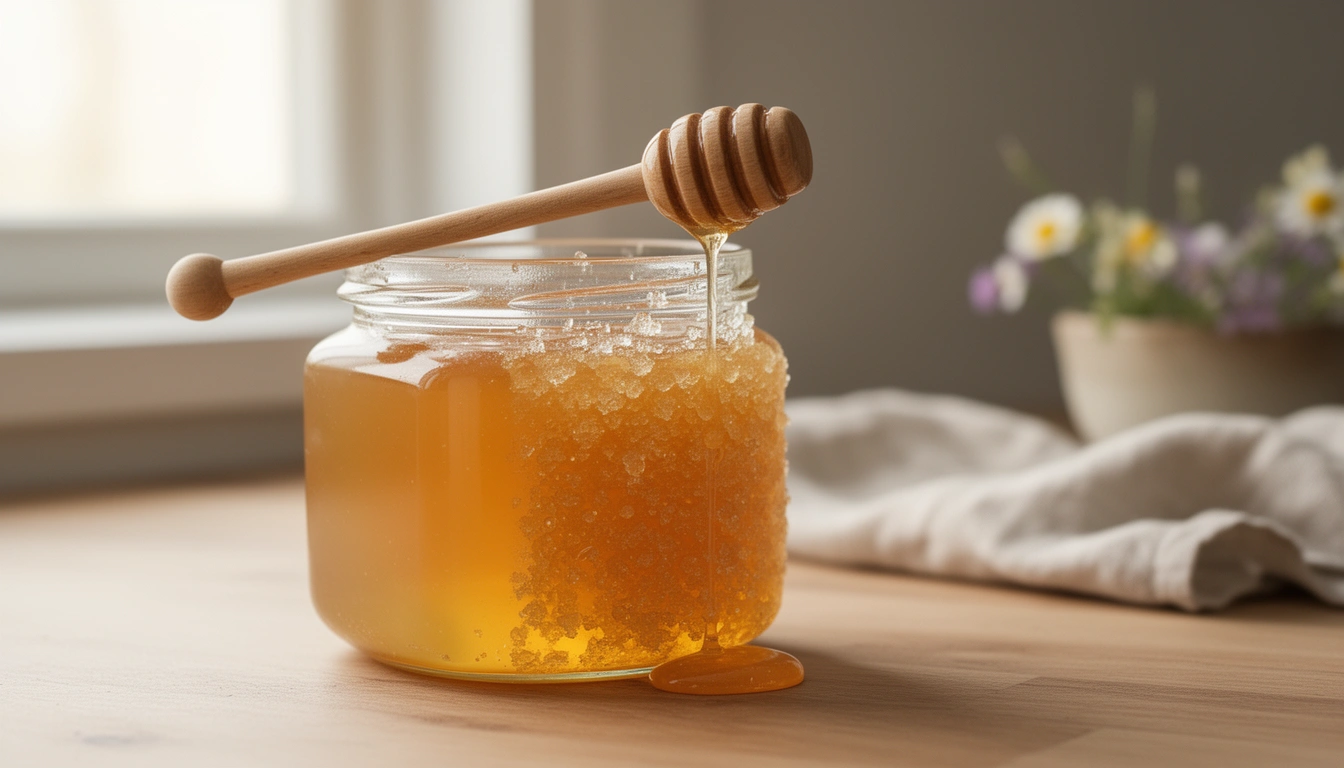
Have you ever opened a jar of honey to find it cloudy, grainy, or solid instead of smooth and runny? That change can be surprising, but it’s a normal physical process rather than a sign the honey has gone bad.
Why does honey crystallise? In short, honey is a supersaturated sugar solution and its sugars can form crystals over time. In this article you’ll learn what causes crystallisation, whether crystallised honey is safe to eat, and practical ways to soften and store honey so it stays usable.
Key Takeaways
- Crystallisation happens because honey’s sugars, mainly glucose, separate from water and form crystals; it’s a natural and reversible process.
- Is crystallised honey safe to eat? Yes—crystallised honey is edible and often preferred for spreading, but check for fermentation or off smells if it has excess moisture.
- To soften crystallised honey, gently warm the jar in a warm water bath; avoid boiling or microwaving which can degrade flavor and nutrients.
- Storage matters: keep honey in a cool, dry place in a sealed container away from direct sunlight to slow crystallisation.
- Raw honey crystallises more readily than processed honey because it contains fine particles and pollen that act as nucleation sites for crystals.
How and Why Honey Crystallises
Honey is mainly a mix of two sugars—fructose and glucose—dissolved in water, plus small amounts of minerals, pollen, and enzymes. When there’s more sugar dissolved than the water can hold at a given temperature, the solution is supersaturated. Over time, especially under cooler conditions, glucose tends to come out of solution and form solid crystals.
What causes crystals to form?
Crystal formation usually needs tiny “nucleation” points to begin. These can be microscopic particles like pollen, air bubbles, bits of wax, or even existing tiny crystals. Temperature changes and the specific sugar balance in the honey influence how fast and what size the crystals become.
Why some honeys crystallise faster
The relative amounts of glucose and fructose matter. Honey with more glucose and less water content tends to crystallise sooner. Floral source matters too—clover, rapeseed (canola), and sunflower honeys often crystallise quickly, while acacia or tupelo with higher fructose crystallise slowly.
Is Crystallised Honey Safe to Eat?
Yes. Crystallised honey is safe to eat and maintains most of its nutritional value. Crystallisation is purely physical—no harmful microbes grow in typical honey because its low water activity and acidity inhibit bacterial growth.
When to be cautious: if honey smells fermenting, foams, or has visible mold, those indicate excess moisture or contamination and you should discard it. Also, never give honey of any kind to infants under one year due to botulism risk.
How to Soften Crystallised Honey
If you prefer smooth, runny honey, you can gently reverse crystallisation. The aim is to dissolve crystals without overheating the honey.
Safe warming methods
- Warm water bath: Place the sealed jar in a bowl of warm (not boiling) water and let it sit, stirring occasionally, until crystals dissolve.
- Low oven: Transfer honey to an oven-safe jar and warm at the lowest setting (below 40–50°C / 104–122°F) until smooth. Check frequently.
What to avoid
Do not microwave sealed jars or overheat honey above moderate temperatures. High heat can alter flavor, darken the honey, and reduce heat-sensitive enzymes that are often valued in raw honey.
How to Store Honey to Control Crystallisation
Proper storage slows crystallisation but can’t always prevent it. The goal is stable, moderate temperature and minimal humidity exposure.
- Keep honey in a tightly sealed container to prevent moisture uptake and contamination.
- Store in a cool, dark cupboard away from ovens or direct sunlight. Room temperature (about 20–25°C / 68–77°F) is fine.
- Avoid refrigerating honey; cold accelerates crystallisation.
Practical Table: Problems, Causes, and Actions
Use this table to quickly diagnose common issues with honey and decide what to do next.
| Problem | Likely Cause | Recommended Action |
|---|---|---|
| Honey has become solid or grainy | Natural crystallisation due to glucose separation | Warm gently in a warm water bath until smooth |
| Honey smells fizzy or fermented | Excess water introduced or container contaminated | Discard if fermenting; prevent by keeping lid sealed and dry |
| Honey darkens and loses aroma after heating | Overheating during processing or reheating | Use lower temperatures; accept some change if warming is necessary |
Does Raw Honey Crystallise?
Raw honey typically crystallises faster than filtered or pasteurised honey. That’s because raw honey retains tiny particles like pollen, propolis, and beeswax that serve as nucleation sites. Also, raw honey often keeps more of its natural enzymes and moisture profile, which affect crystallisation.
If you like your honey raw but smooth, you can gently warm it to re-liquefy and then store it sealed at room temperature. Frequent heating and cooling cycles will encourage faster re-crystallisation, so aim for minimal temperature swings.
Common Mistakes and How to Avoid Them
People often make simple errors that either ruin honey’s texture or shorten its useful life.
- Storing in the fridge: Cold speeds crystallisation—keep honey at room temperature instead.
- Heating too quickly: Microwaving or boiling can change flavor and degrade nutrients—use gentle, indirect heat.
- Introducing moisture: Using a wet spoon or storing near steam sources can raise moisture and risk fermentation.
Frequently Asked Questions
How long does it take for honey to crystallise?
It varies. Some honeys crystallise in weeks, others take months or years. Factors include floral source, temperature, and whether the honey is raw or processed.
Can you stop crystallisation permanently?
Not reliably. You can slow it by storing honey warm and filtered, but crystallisation is a natural tendency of many honeys and will eventually occur under favourable conditions.
Is crystallised honey better or worse than runny honey?
Neither is inherently better; it’s a matter of use and preference. Crystallised honey is easier to spread on toast, while runny honey pours well for drizzling.
Will heating honey destroy its health benefits?
Gentle warming won’t remove all beneficial qualities, but sustained high heat can reduce heat-sensitive enzymes and alter flavor. Use low, controlled temperatures to soften honey.
How can I keep a smooth texture when buying honey?
If you want consistently smooth honey, choose commercially filtered and pasteurised products or look for creamed honey, which is intentionally crystallised into small, smooth crystals.
Conclusion
Crystallisation is a normal, reversible process caused by honey’s sugar chemistry and small particles that act as crystal seeds. Crystallised honey is safe to eat unless it shows signs of fermentation or contamination.
Next time your jar solidifies, decide whether to enjoy it as-is, gently warm it to restore liquidity, or choose a different honey type that better matches how you use it. Store honey sealed at room temperature to keep it stable for longer.