How to Create a Bee-Friendly Garden in the UK
Creating a bee-friendly garden in the UK helps local pollinators, improves fruit and vegetable yields, and brings seasonal colour and life to your outdoor space. Start by choosing the right plants for bees and planning for continuous nectar and pollen sources through the seasons. Provide water, shelter and safe nesting habitats while avoiding pesticides and single-purpose lawns. Finally, learn how to manage swarms and work with local beekeepers so your garden supports both wild and managed bees.
Choose the right plants and plan for year-round forage
The most important step is choosing plants that provide nectar and pollen across the year. Aim for a sequence of blooms from early spring to late autumn so bees never face a food gap. Native wildflowers, shrubs and trees are often the best choices because local bees have evolved with them.
Plant in groups so flowers are easy for bees to find. Clumps of the same species 1 to 3 metres wide are better than single plants scattered around. Include plants with open flowers for short-tongued bees and deeper tubular flowers for long-tongued species like bumblebees.
Use this seasonal list to plan your borders and containers. Choose plants that suit your soil and light conditions to ensure they thrive and flower reliably.
| Season | Best plant types | Examples |
|---|---|---|
| Early spring | Early bulbs and flowering trees | Crocus, snowdrop, willow, mahonia |
| Late spring | Herbaceous perennials and shrubs | Salvia, lavender, comfrey, blackthorn |
| Summer | Long flowering perennials and annuals | Foxglove, thyme, borage, buddleia |
| Autumn | Late nectar sources and seedheads | Aster, ivy, michaelmas daisy |
Focus on native and single species flowers
Single or single-form flowers have accessible nectar and pollen. Double flowers may look showy but can hide nectar and are poor for bees. Choose native species where possible. If you buy plants from nurseries, check they are grown without systemic pesticides.
Provide water, shelter and nesting sites
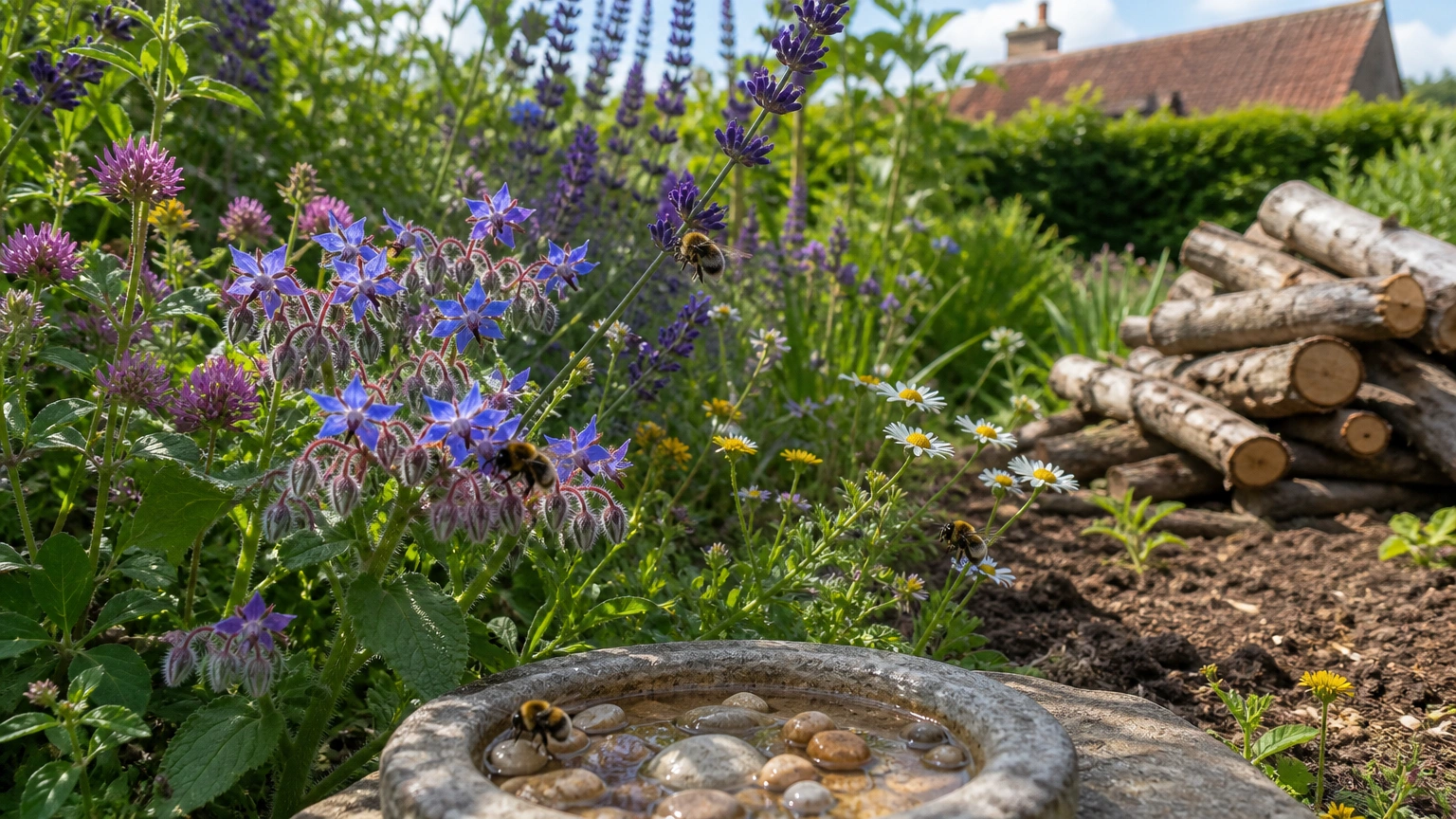
Bees need water for cooling and diluting food, shelter for bad weather, and safe nesting places. A shallow water source with stones or floating wood lets bees land and drink safely. Place it near sunny, sheltered spots.
Leave patches of bare earth, log piles, dead stems and tussocky grass for ground nesting and cavity nesting bees. Nest boxes can help some solitary species but are no substitute for natural habitats.
Avoid pesticides and choose bee-safe treatments
Toxic chemicals can harm bees even at low levels. Avoid insecticides whenever possible. If you must treat pests, choose mechanical methods such as hand picking, trapping or targeted barriers. Use biological controls and only apply any approved treatment late in the evening when bees are not active.
Check plant labels and ask suppliers about pesticide use. Many garden plants arrive pre-treated with insecticides that persist in nectar and pollen. Buying from trusted local suppliers who share your bee-friendly values reduces the risk.
Create different habitat zones to support diverse bees
Different bee species have different needs. A mix of sunny flower beds, a wild corner left to grow, a hedge, and a small patch of bare earth will support a wide range of pollinators. Hedges of native shrubs provide shelter, food and corridors between gardens.
If you have limited space, use containers on a sunny balcony or windowsill with thyme, lavender or borage. Even a few pots can make a good local resource for bees in urban areas.
Manage lawn and mowing for pollinators
Replace part of your lawn with wildflower turf or allow areas to grow and flower. Mow less often and leave clumps of longer grass for overwintering insects. If you need a neat lawn, create a dedicated wild patch at the edge or in a corner that you only mow once or twice a year.
Work with neighbours, local beekeepers and community projects
Pollinators move across the landscape. Coordinating with neighbours or local groups increases the benefit. Community green spaces, allotments and school gardens are high impact locations for pollinator planting.
If you are in the UK and want to learn more or keep bees, consider local courses. Practical training can teach you how to manage hives safely and ethically. If you find a swarm in your garden, read practical advice about handling them and contact professional removals when needed.
Protecting bees during swarming and when colonies move in
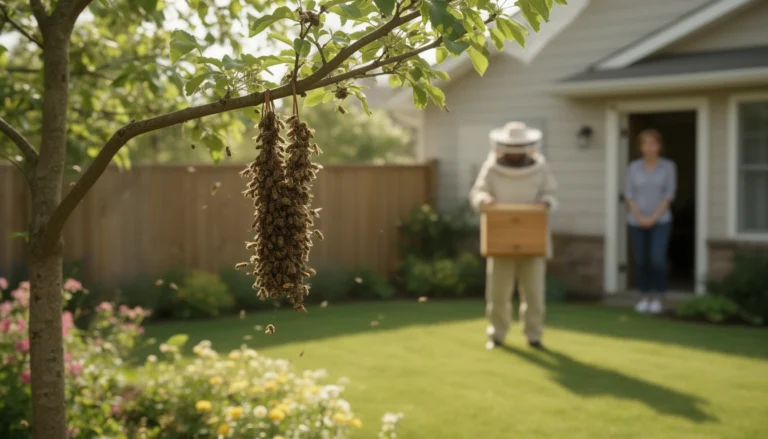
Swarming is a natural process when a colony splits. A swarm in a garden is generally not aggressive, but it should be treated with care. If you discover a swarm, keep people and pets calm and at a distance and contact a trained removal service if the swarm is in a risky location.
If bees establish a colony in a structure, do not try to remove them yourself. Professional services can relocate bees safely while protecting both people and pollinators.
Practical resources and local services
- Learn safe swarm handling in our article about what to do when a swarm arrives: A Swarm of Bees Has Arrived in Your Garden.
- If removal is required, use licensed professionals rather than DIY removal: Bee Removals.
- For practical training on hands-on beekeeping, consider local Beekeeping Courses.
- Learn how beekeeping and pollination link to local food systems: Pollination Services.
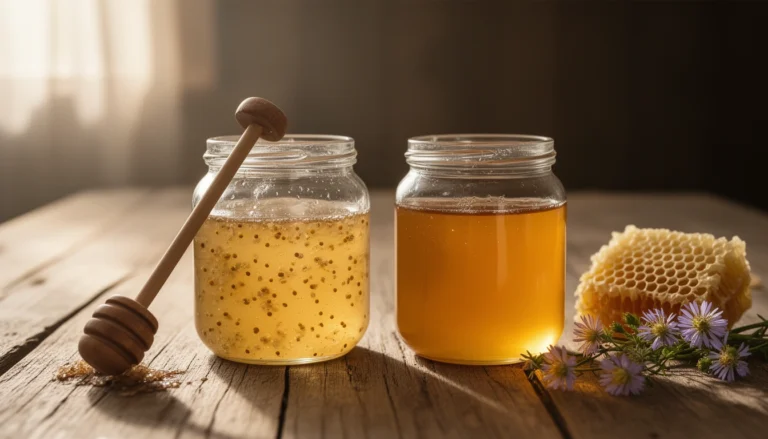
- Understand how your garden feed affects honey quality by reading about honey production differences: Raw Honey vs Processed Honey.
Monitoring and troubleshooting common problems
If flowers are not attracting bees, check for pesticide drift from neighbours, lack of variety, or poor planting placement. Bees prefer sunny, sheltered spots with easy access to flowers. Improve chances by adding flat, open flowers and leaving early bloomers like crocus or willow in place.
If you see few bees during warm weather, consider whether water is available and whether there are continuous nectar sources nearby. Increasing habitat complexity and planting in larger groups usually helps within a season or two.
FAQ – Common questions about creating a bee-friendly garden in the UK
Q: What are the best plants for bees in the UK?
A: Choose native shrubs, trees and single-form flowers that flower across seasons. Examples include willow, blackthorn, lavender, borage and aster. Aim for diversity rather than a single species.
Q: How do I attract bees to my garden quickly?
A: Plant clusters of nectar rich flowers, provide a shallow water source, avoid pesticides and leave some bare ground or dead stems for nesting. Fast bloomers like borage and phacelia can attract bees within weeks.
Q: Are bee hotels effective?
A: Bee hotels can help cavity nesting solitary bees if correctly built and maintained. They must be cleaned or replaced periodically and placed facing south or south east in a sheltered sunny position.
Q: What if a swarm appears in my garden?
A: Keep a safe distance and contact an experienced removal service or local beekeeper. A swarm is usually temporary and can often be safely relocated. See guidance on dealing with swarms for details.
Conclusion
Creating a bee-friendly garden in the UK is achievable whether you have a large garden or a small balcony. Focus on year-round, pesticide free planting, add water and nesting options, and work with local resources when swarms or colonies require professional care. Small, thoughtful changes add up over seasons to support pollinators, improve your garden yield and bring nature closer to home.
Frank’s Honey Company supports sustainable beekeeping and encourages gardeners to choose native plants and responsible practices to protect bees and local ecosystems. Learn more about our approach in the About Us page.