Raw Honey vs Processed Honey: Understanding the Differences
Are you trying to choose between jars labelled “raw” and “processed” when buying honey? The labels can be confusing and you may wonder what actually changes between them and whether one is meaningfully better.
In short: raw honey is honey taken from the hive and filtered minimally, keeping many natural particles and enzymes, while processed honey has been heated, filtered, or blended to improve clarity, shelf life, or uniformity. This article explains the differences, why they matter for taste and nutrition, and how to identify which type you have.
Key Takeaways
- Raw honey is lightly filtered and unheated, retaining pollen, enzymes, and natural particulates.
- Processed honey is often heated (pasteurised), finely filtered, or blended to improve appearance and stability.
- Processing changes texture, clarity, and some heat-sensitive compounds but does not make honey unsafe in most cases.
- You can identify raw honey by label transparency, visible particles, and natural crystallisation patterns, but labels aren’t always reliable.
- Choose raw honey for flavour complexity and potential minor nutritional benefits; choose processed honey for consistent texture and longer clear appearance.
What “Raw Honey” and “Processed Honey” Mean
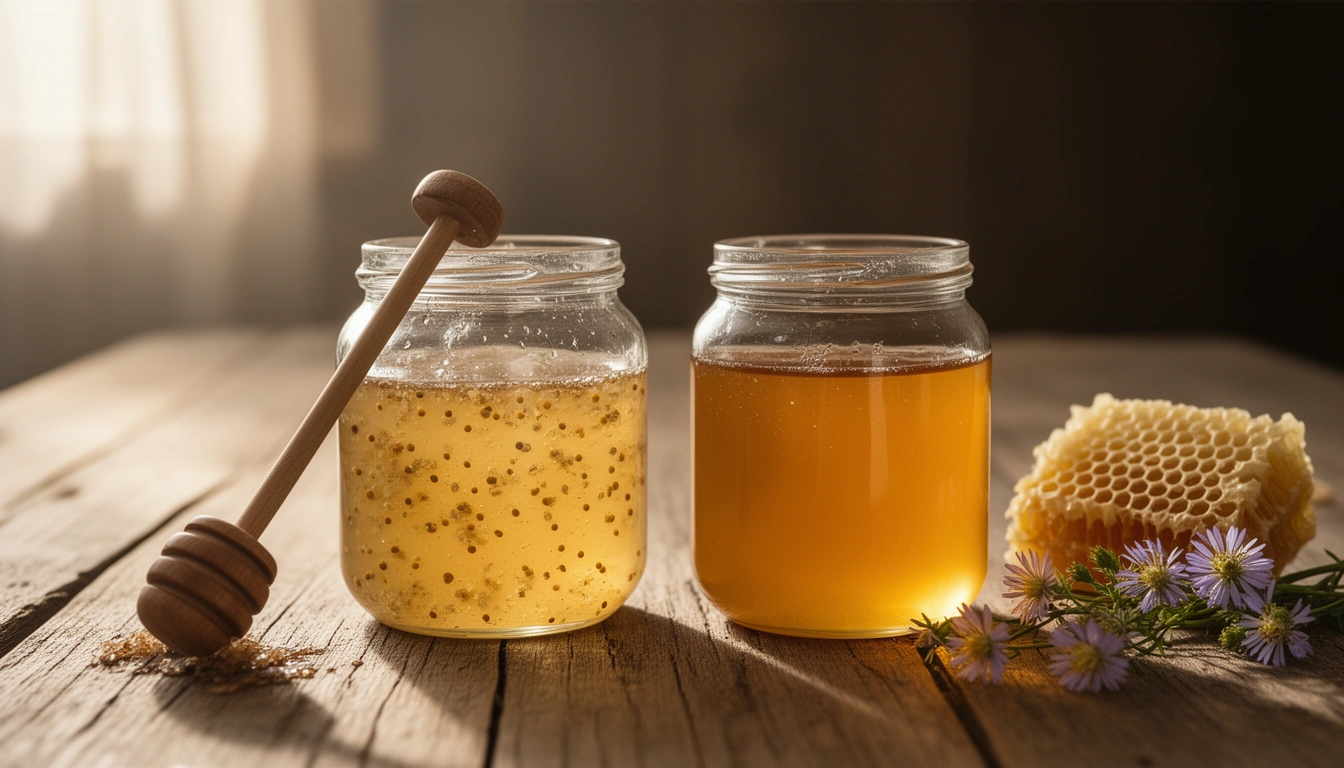
Understanding the terms helps you make an informed choice. “Raw honey” usually refers to honey removed from the comb and strained to remove large debris, but it is not heated above temperatures that would significantly alter natural components. It often contains pollen grains, tiny wax fragments, and trace particles from the hive.
“Processed honey” is a broad category that includes honey that has been heated, filtered, blended, or otherwise treated after extraction. Common goals are to slow crystallisation, create a uniform colour and flavour, and reduce visible particles. Pasteurisation is one form of processing where honey is heated to reduce yeast and delay fermentation.
How Processing Affects Honey
Processing changes physical and some chemical aspects of honey. Here are the main effects you should know about:
- Texture and clarity: Fine filtration and heating make honey smooth and clear, often preferred in retail jars.
- Crystallisation: Heating and filtering remove or reduce particles that act as nucleation points, slowing crystallisation.
- Enzymes and volatile compounds: Heat-sensitive enzymes and aroma molecules can be reduced by pasteurisation, altering subtle flavours.
- Pollen content: Heavy filtration removes most pollen, which affects both texture and how you might test authenticity.
Why These Differences Matter to You
Your priorities—taste, appearance, shelf behaviour, or dietary concerns—will determine which type is better for you. If you value a complex flavour and possible minor health-supporting compounds, raw honey may be preferable. If you need a clear, uniform product with predictable behaviour in recipes, processed honey may suit your needs better.
Be aware of safety notes: honey of any kind should never be given to infants under one year because of the small risk of botulism spores. For older children and adults, both raw and processed honey are generally safe when stored properly.
How to Identify Raw Honey
You can make an informed guess about whether honey is raw by checking the jar, label, and physical behaviour. Labels can be misleading, so combine clues rather than relying on a single sign.
- Look for language like “raw”, “unpasteurised”, or “cold-processed” on the label.
- Check for visible pollen specks or tiny wax particles in the jar.
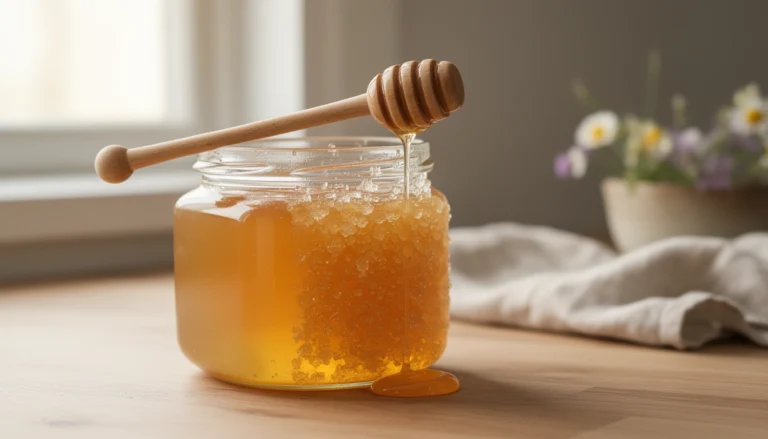
- Observe crystallisation: raw honey often crystallises sooner and forms a fine, grainy texture.
- Ask the seller about extraction and whether the honey was heated.
If you want to learn more about how honey is produced and handled from hive to jar, a producer’s process page can be helpful to read before you buy; for example, this overview of Honey Production.
Practical Uses: When to Choose Each Type
Both raw and processed honey work well as sweeteners, in cooking, or for topical uses. Use these simple guidelines to choose:
- Choose raw honey when you want bold, variable flavours for drizzling on yogurt, cheese, or in tea.
- Choose processed honey for baking and recipes where a smooth, uniform liquid is easier to measure and blend.
- Keep raw honey refrigerated or in a cool, dark cupboard if you want to preserve its texture; processed honey is less sensitive to variations in storage.
Practical Table: Choosing Honey For Your Needs
The table below compares common options to help you pick the right honey for specific uses.
| Option | Best For | Advantages | Limitations |
|---|---|---|---|
| Raw honey | flavour-forward dishes, natural appearance | Complex flavour, contains pollen and enzymes | Crystallises sooner; appearance may vary |
| Pasteurised/processed honey | baking, uniform jars for retail | Smooth, clear, consistent texture and colour | Reduced volatile aromas and some heat-sensitive compounds |
| Blended commercial honey | consistent flavour at scale | Predictable taste and viscosity across batches | May contain honey from many sources and heavy filtration |
Common Mistakes and How to Avoid Them
Buyers sometimes assume labels provide the full story or that crystallisation means spoilage. Avoid these errors by checking multiple cues before you judge quality.
- Don’t assume all honey labelled “natural” or “pure” is unprocessed—ask the seller or check production notes.
- Don’t discard crystallised honey; gentle warming or stirring will return it to liquid form without harm.
- Don’t give honey to infants under one year old, regardless of processing.
Frequently Asked Questions
Is raw honey the same as unpasteurised honey?
Yes, the terms overlap: raw honey is typically unpasteurised or lightly processed so it retains more of its natural particles and enzymes than pasteurised honey.
Does processing remove nutrients from honey?
Processing can reduce some heat-sensitive compounds and volatile aromas, but basic sugars and many minerals remain. The changes are generally subtle and one factor among taste and use considerations.
How can you tell if honey is adulterated?
Detecting adulteration (for example, added sugar syrups) often requires laboratory testing. Visible signs like unusually clear honey, very slow crystallisation, or inconsistent labelling can be red flags.
Will raw honey crystallise faster than processed honey?
Typically yes: raw honey contains tiny particles and pollen that act as nucleation sites, encouraging crystallisation. Processed honey is filtered and heated to delay this process.
Is all commercial honey processed?
Not all, but much commercial honey undergoes some level of processing—filtering, heating, or blending—to meet retailer expectations for clarity and consistency. Check producer information when possible.
Can you use raw honey in recipes?
Yes. Raw honey works well in most recipes but may change texture or flavour compared with processed honey, so adjust expectations for appearance and sweetness intensity.
Conclusion
Raw honey and processed honey each have clear strengths: raw honey for flavour complexity and minimal handling, processed honey for smoothness and stability. Decide which matters more for your intended use—cooking, topping, or storage—and look for transparent labelling or producer information when possible.
If you want to learn more about beekeeping, equipment, or how honey is handled before it reaches jars, there are practical resources available such as pages about Beekeeping Equipment and wider company information on the About Us page.